


BIG INTERVIEW
Global Playwright
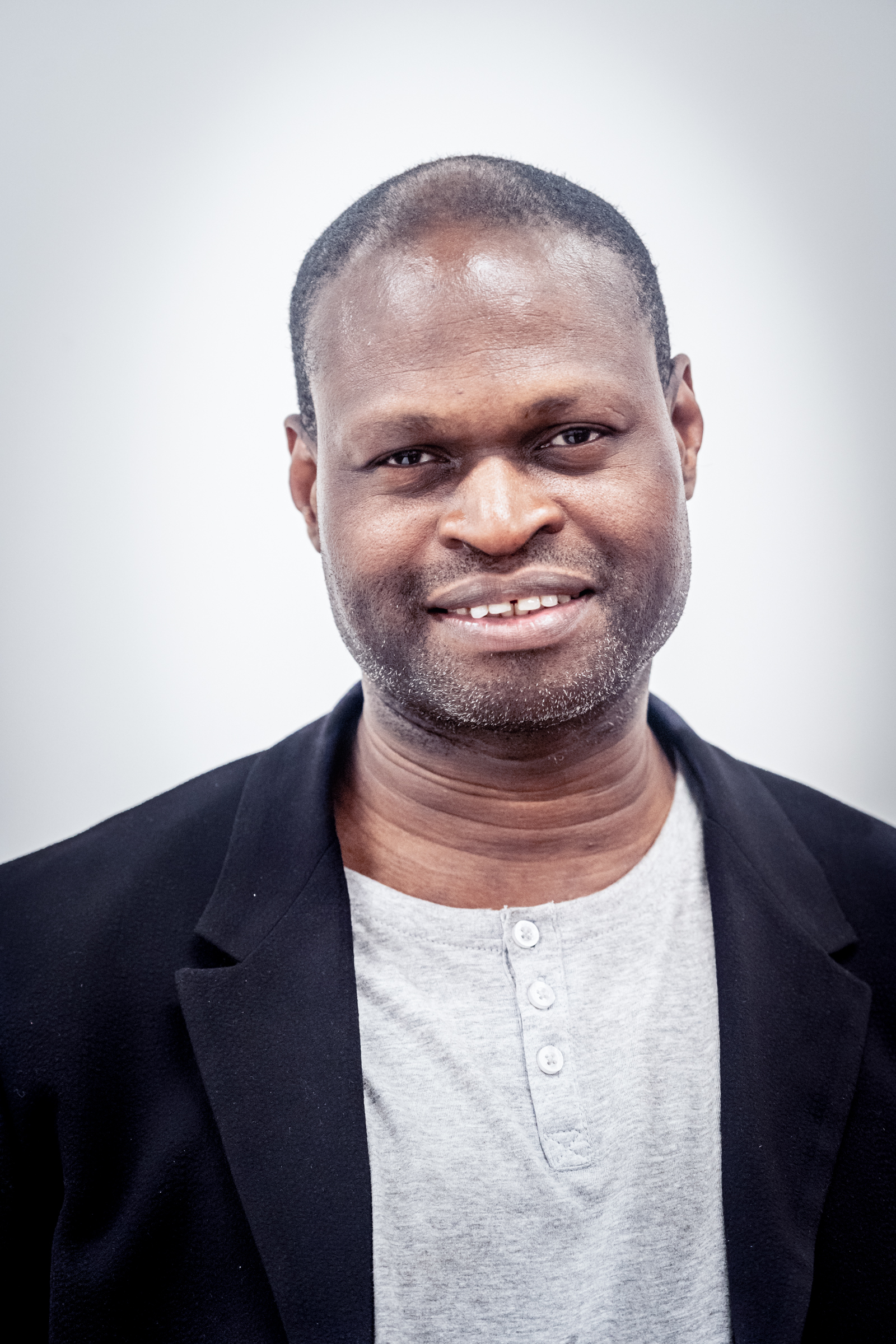
Oladipo “Dipo” Agboluaje, 57, is a British/Nigerian playwright best known for Early Morning (2003) and lya-lle (The First Wife) which won the Alfred Fargon Award in 2009. Susan Elkin talked to him.
Dipo was born in Hackney, but his family returned to Nigeria when he was nine. “So I did all my secondary schooling – including school plays – and my first degree in Nigeria”, he says, recalling a childhood studded with enthusiastic reading. “My father had a good library and I read all sorts of fiction: A Tale of Two Cities, Jaws, and a lot of Sherlock Holmes and Ian Fleming, for instance. Somehow I bypassed the pulp fiction stage and didn’t get to it until much later, although I like it now.”
The future writer was emerging too. “I wrote comic books for which my brother did the drawing, then some illustrated short stories which were mostly fantasy,” says Dipo, who went on to University of Benin to do a four-year degree in theatre arts. “Yes” he chuckles. “There was inevitable disapproval from some family members. I had good grades and the emphasis in Nigeria was firmly on the professions. My uncles and aunts would have much preferred me to do law or pharmacology. In fact, those four years thoroughly embedded my love of theatre. And I soon knew that my instincts had been right.”
those four years thoroughly embedded my love of theatre. And I soon knew that my instincts had been right
But Nigeria in the late 1980s and early 90s was mired in a debt crisis, austerity and structural adjustment so there wasn’t much scope for new arts graduates to use their skills. “I worked in an art gallery for while which was great, but still not what I really wanted to be doing, although I told myself it was still arts,” says Dipo. Finally he came back to Britian in his mid-20s in the hope of finding a more arts-friendly culture.
Dipo continues: “At first I just had to take any job I could get – retail and so on. But I also went back into education in the form of an MA in Literature at what is now University of West London. While I was there I attended poetry nights and I won a writing competition. Then one of the lecturers pointed out that my prose sounded like dialogue. So I thought: ‘Why not?’ and started to read plays and go to the theatre as often as I could afford it.”
He also embarked on a PhD in African Theatre through the Open University. “And the writing I was doing at that time developed into Early Morning which was staged at Oval House Theatre (now Brixton House). And that was the play which became my calling card. I’m a distinctive voice and I don’t fit into any box: born in England, grew up in Nigeria and then back to England. Some producers don’t know what to make of it.” He adds: “I got my next commission off the back of Early Morning and I realised there was an audience.”
Dipo has since written many commissioned stage and radio plays. I have fond memories, for example, of his adaptation of Elizabeth Laird’s The Garbage King for Unicorn Theatre in 2010, which is about street children in Ethiopia. Oberon Books (now absorbed into Bloomsbury) published a collection of Dipo’s plays under the title Plays One in 2014. He maintains a good relationship with Bloomsbury and is on their advisory board. And he was writer-in-residence at National Theatre in 2019. Recent plays include Here’s What She Said to Me which opened at Crucible Sheffield in 2022 and then toured nationally.
In 2022 his adaptation of Ben Okris’ novel The Famished Road was staged by Dramaten in Stockholm and Dipo was just back from Sweden when he spoke to me. “The National Black Theatre of Sweden (NBTS) have made me an ambassador,” he tells me, clearly pleased about this development.
I like teaching but teachers really do need sabbaticals!
“I’ve also done a lot of teaching,” says Dipo, mentioning University of North London and Goldsmiths College where his focus was post-colonial theatre. Moreover, he has taught creative writing at City University and University of Greenwich. He says: “The trouble with teaching, though, is that it’s a fixed commitment week by week and it’s difficult to get any creative work done. I like teaching but teachers really do need sabbaticals! That’s why I have no regular teaching jobs at present, although I do one-off events such as workshops in secondary schools for the Royal Literary Fund and workshops for teachers facilitated by, for example, Theatre 503 or Talawa Theatre.” And Dipo is course director of the British Black Theatre course at British American Theatre Academy (BADA).
After our initial conversation, Dipo emails me to tell me about two things he forgot to mention. He has recently been appointed supervisor on the MSt Creative Writing Programme at Cambridge. Clearly a very hard working, portfolio man he’s treasurer of the African Theatre Association too.
He sympathises hugely with what teachers at all levels have to do. “I was a teaching assistant at one point and I’ve seen the workload in secondary schools. They have to work very hard. Even at tertiary level I had to teach several different courses concurrently – say African studies on Monday and something completely different on Wednesday – which means you never stop researching. Then there are supervision duties, admin tasks and marking followed by secondary marking. It all goes way beyond anything which can be fitted into a 10-week term.”
Dipo is currently engaged, among other projects on a National Theatre Connections commission probably for 2026 or perhaps 2027. That’s the annual initiative which enables student groups all over the country to stage a brand new 40-minute play in a local professional environment. The best of these companies are then invited to London to perform their work in a two-day festival in the Dorfman Theatre on the South Bank.
“Connections is a rather different way of working” Dipo explains. “There are a number of caveats. You have to cater for a range of abilities because most of the actors have probably had no training. You need to build in a lot of one-liners and allow for shyness, for instance. It’s completely different from writing for youth theatre where the standard can be almost professional. So it’s not a magnum opus because it has to serve a very specific purpose – and I just keep working on redrafts.”
So how does Dipo get the words on the paper in practical terms? “Well recently I’ve done quite a lot of work at home” says Dipo, who lives in Clapham and has no children. “I used to go to the Royal Festival Hall or British Library because it gave me a sense of vocation – going to work Monday to Friday as it were. Both places eventually got a bit crowded. So now I go to National Theatre Studio if I can. If there’s a space that’s where I’ll be. Or I stay at home.”
It’s hard to believe Dipo has any spare time but he is an enthusiastic Arsenal supporter. “And in the future I’d really like to travel more. I want to see much more of America. I went there last year to recruit students from various states, but I was based mostly in New York.” He is also aware that Africa is a vast continent and he’s keen to explore beyond Nigeria.
“Otherwise I have no ambitions beyond play writing. All I want is to keep writing and I’m looking forward to more commissions. I just love the process,” declares Dipo resolutely.
Dipo’s new play Crown of Blood, an adaptation of Macbeth, is being published by Methuen Drama next February and is touring in theatres below:
Crucible, Sheffield Theatres – 2-7 February 2026
Belgrade, Coventry – 9-14 February 2026